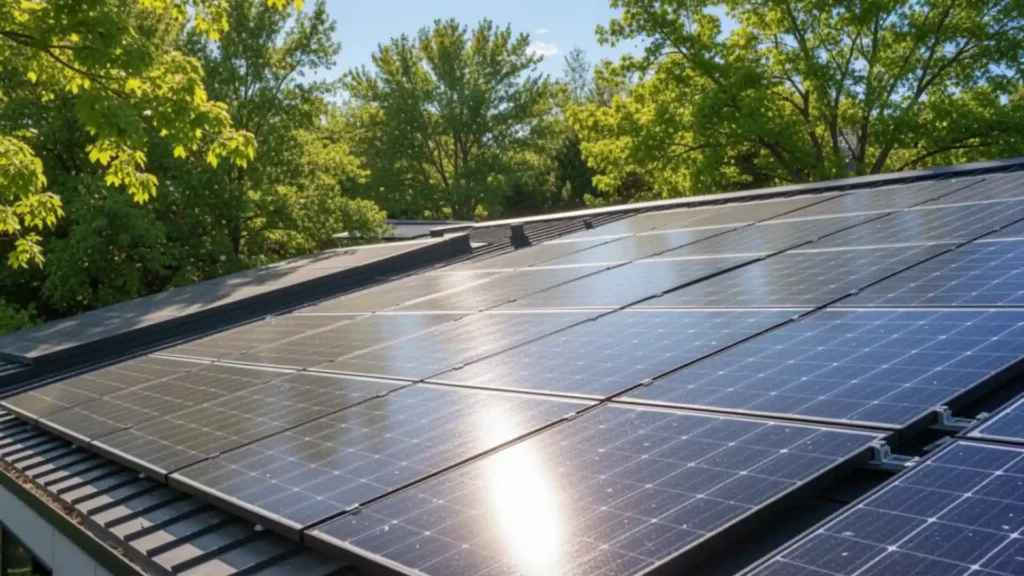
Many homeowners install solar panels to save energy and reduce electricity costs. However, one important factor often overlooked is roof ventilation. Proper ventilation directly affects how well solar panels perform and how long your roof lasts.
When people search for solar panels roof ventilation, they are usually asking one of two things: how solar panels interact with existing roof vents, or how solar-powered ventilation systems help cool the attic. Both topics are important because airflow beneath the roof influences solar panel efficiency, attic temperature, and overall home comfort.
If ventilation is poor, heat builds up under the roof. This trapped heat can raise the temperature around solar panels, which may reduce their efficiency and increase cooling costs inside the home. Understanding how solar panels and ventilation work together helps homeowners avoid installation mistakes and maximize their solar investment.
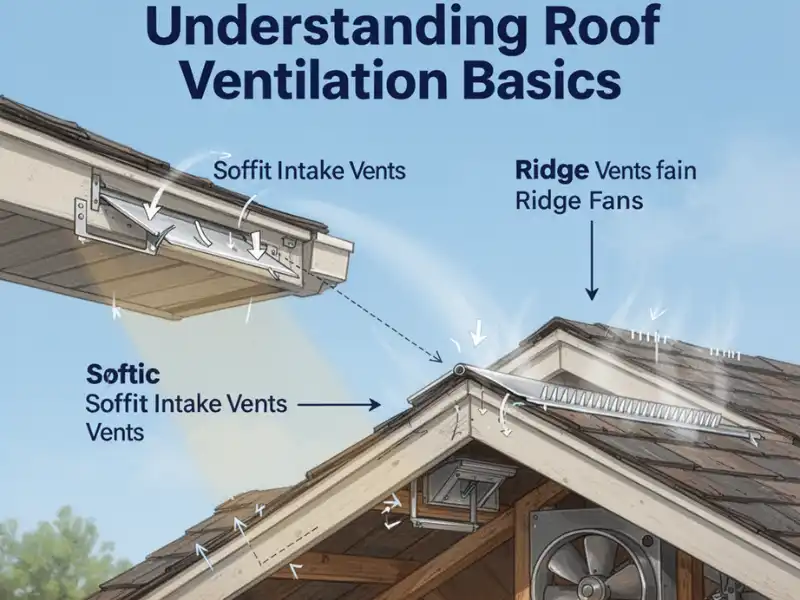
Understanding Roof Ventilation Basics (soffit intake vents, ridge vents, attic fans)
Roof ventilation allows fresh air to enter the attic and hot air to escape. This airflow prevents heat and moisture buildup that can damage roofing materials and reduce energy efficiency.
The most common roof ventilation components include:
Soffit Intake Vents
These vents are located under the roof’s overhang. They allow cool outside air to enter the attic space.
Ridge Vents
Installed at the peak of the roof, ridge vents allow hot air to rise and exit naturally. They work together with soffit vents to create continuous airflow.
Attic Fans
Attic ventilation fans help remove excess heat from the attic. Some systems run on electricity, while others use solar power.
When these ventilation systems work properly, they keep the attic temperature balanced and reduce stress on roofing materials. This airflow also plays a role in the performance of solar panels’ roof ventilation systems by preventing excessive heat buildup beneath the panels.
Two Meanings of Solar Panels Roof Ventilation
The phrase solar panels roof ventilation can refer to two different but related concepts.
Solar-Powered Attic Vents
Solar attic vents are small ventilation fans powered by sunlight through a built-in solar panel. Instead of using electricity from your home, they operate automatically when the sun is shining, helping remove hot air that builds up in the attic during the hottest part of the day.
By improving airflow, these systems lower attic temperatures, reduce strain on HVAC systems, prevent moisture buildup, and help extend the lifespan of roofing materials. Because they run on solar energy and require no wiring to the home’s electrical system, many homeowners install solar attic vents alongside solar panels to create a more energy-efficient and well-ventilated roofing system
How PV Solar Panels Affect Existing Vents
The second meaning of solar panels’ roof ventilation relates to how photovoltaic (PV) panels interact with existing roof vents.
Solar panels are mounted a few inches above the roof surface. This gap allows air to flow underneath the panels, which helps cool them naturally. However, installers must carefully plan panel placement to avoid blocking roof vents.
If vents are obstructed, attic airflow can be disrupted. This may lead to trapped heat, moisture buildup, and reduced roof performance. That is why professional installers carefully design the panel layout around ventilation components.
How Roof Ventilation Regulates Solar Panel Operating Temperature
Solar panels operate most efficiently at around 25°C (77°F). When temperatures rise above this level, efficiency gradually decreases.
Research shows that for every degree above 25°C, solar panel efficiency drops by about 0.5%. This means overheating can reduce the amount of electricity your system generates.
Proper solar panel roof ventilation helps prevent excessive heat buildup around the panels. The airflow between the roof surface and the solar panels allows trapped heat to escape naturally, keeping the system cooler and operating more efficiently. Good ventilation can lower panel temperature, improve electrical performance, protect roofing materials from heat damage, and extend the overall lifespan of both the roof and the solar system.
Homes with well-designed roof ventilation often experience better solar energy output compared to roofs with poor airflow.

Which Vents Solar Panels Cannot Be Installed Over
Solar installers must avoid covering certain types of roof vents. Blocking these vents can cause serious ventilation problems.
Vents that should never be covered include:
- Dryer vents
- Bathroom exhaust vents
- Attic exhaust vents
These vents release moisture and hot air from inside the home. If panels block them, humidity and heat can build up inside the attic.
However, some vents can be adjusted or relocated during installation.
Vents that can sometimes be worked around include:
- Plumbing vent pipes
- Small passive vents
In many cases, installers reposition the panel layout or install vent extensions so airflow remains unobstructed. Careful planning ensures the solapanels’ls roof ventilation system works correctly without compromising attic airflow.
Solar-Powered Attic Fans as a Solution: Benefits, Top Brands, Costs
Solar-powered attic fans are becoming increasingly popular as a ventilation upgrade for solar homes. These systems use a small solar panel to power a ventilation fan that removes hot air from the attic.
Benefits
Solar attic fans offer several advantages:
- Reduce attic temperature
- Lower cooling costs
- Extend roof life
- Improve indoor comfort
- Operate without electricity
Because they run on sunlight, they work hardest when the attic is hottest.
Popular Brands
Some widely recognized solar attic fan brands include:
- QuietCool
- Remington Solar
- Natural Light Solar Attic Fan
- Broan-NuTone
These systems are designed for long-term performance and durability.
Typical Costs
The cost of a solar attic fan usually ranges between $300 and $900, depending on the brand and installation requirements. Professional installation may add additional labor costs.
For homeowners installing solar panels, combining them with solar attic fans can significantly improve overall roof airflow.
Installation Tips and Coordination Between Roofers and Solar Installers
Installing solar panels requires careful coordination between roofing professionals and solar installers.
Here are some key tips to ensure proper solar panel roof ventilation:
Inspect the roof ventilation before installation
Check whether soffit vents, ridge vents, and attic fans are functioning properly.
Plan panel placement carefully
Panels should never block critical vents or airflow pathways.
Maintain airflow beneath pan.els
Installers should leave enough clearance between the roof and panels for natural cooling.
Upgrade ventilation if needed
If the attic already runs hot, adding solar attic fans or additional vents may improve system performance.
A well-planned installation ensures solar panels and roof ventilation work together rather than competing for space.

Final Thought
Solar energy systems are a great investment for homeowners, but they perform best when combined with proper roof ventilation. The relationship between airflow and solar panel performance is often underestimated. Understanding solar panels’ roof ventilation helps homeowners avoid installation mistakes, protect their roof structure, and maximize solar efficiency.
Through proper panel placement, maintaining ridge and soffit vents, or adding solar-powered attic fans, ventilation plays a critical role in solar system performance. By ensuring your roof is properly ventilated, you create the ideal environment for solar panels to operate efficiently for decades. If you’re planning a solar installation or want to improve your roof ventilation system, contact us today to discuss the best solution for your home and ensure your solar panels perform at their best.
Join Our Community
Join our community on Facebook, and don’t forget to subscribe to us on YouTube for new content each week.
FAQs
1. Do solar panels affect roof ventilation?
Yes. Solar panels are installed above the roof surface, allowing airflow underneath, which helps maintain proper roof ventilation.
2. Why is roof ventilation important for solar panels?
Good ventilation reduces heat buildup around panels, which helps maintain efficiency and protects roofing materials.
3. Can solar panels be installed over roof vents?
Some vents can be worked around, but installers must avoid covering dryer, bathroom, or attic exhaust vents.
4. What temperature do solar panels work best at?
Solar panels perform best around 25°C. Efficiency typically decreases slightly as temperatures rise above this level.
5. Do solar attic fans help solar panel performance?
Yes. Solar attic fans improve attic airflow, reduce heat buildup, and help maintain a cooler environment for solar panels.