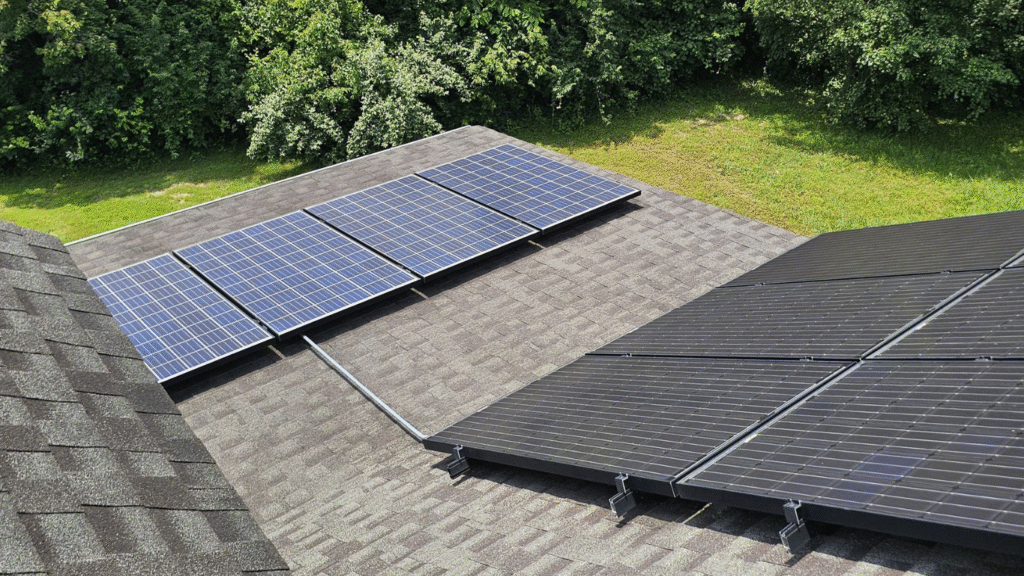
When homeowners invest in solar panels, they expect consistent energy production and long-term savings. However, one factor that can significantly affect performance is solar panel shade impact. Even a small amount of shade can reduce the overall energy output, shorten the system’s lifespan, and affect your return on investment. At FM Roofing, we help homeowners in Kirkwood understand how shading influences solar energy systems and what can be done to reduce its effects.
Understanding the Solar Panel Shade Impact
The solar panel shade impact occurs when trees, buildings, chimneys, or other obstructions block sunlight from reaching solar panels. Since panels rely on sunlight to generate electricity, any shading can cause a noticeable drop in efficiency. Even if only one panel is shaded, it can affect the entire string of panels, depending on the system configuration.
At FM Roofing, we’ve seen how homeowners often underestimate the role of shading. A few overgrown branches or a newly built structure nearby can lead to reduced energy production and increased reliance on grid electricity, cutting into the cost savings of solar power.
How Solar Panels Work and Why Shade Matters
Solar panels consist of photovoltaic (PV) cells that convert sunlight into direct current (DC) electricity. When sunlight is reduced due to shading, these cells generate less power. Because most solar systems are connected in a series, the solar panel shade impact can reduce the output of all panels connected in that line.
For example, if a tree casts a shadow on one panel, the total system output could drop by as much as 30% or more. FM Roofing educates homeowners on system design and placement to minimize these losses.
Common Sources of Shade
There are several sources of shading that contribute to the solar panel shade impact, including:
- Trees and Vegetation: Branches and leaves can grow over time and obstruct sunlight.
- Chimneys and Roof Structures: These can cast shadows, especially during morning or evening hours.
- Neighboring Buildings: Tall homes or commercial structures may block sunlight throughout the day.
- Seasonal Changes: As the sun’s angle shifts throughout the year, shading patterns can change.
FM Roofing always performs a detailed site analysis before installation to identify these potential issues and recommend the best solutions. Link to our service page for solar installation.
The Chain Reaction Effect of Shading
A major problem with the solar panel shade impact is its domino effect. When one panel’s production drops, it can limit the performance of connected panels in the same circuit. This is particularly true for traditional string inverter systems.
FM Roofing often suggests microinverter or power optimizer systems to minimize these effects. These technologies allow each panel to operate independently, so shading on one doesn’t compromise the entire array’s performance.
How Much Shade Is Too Much?
Even partial shade can have a big impact. Research shows that shading just 10% of a solar panel can reduce total energy output by 25–35%. This means that even brief or minor shading events—like passing clouds or nearby trees—can have measurable effects on your system’s performance.
At FM Roofing, we assess the solar panel shade impact with precision tools that map sunlight exposure throughout the year. This ensures that your panels are positioned for maximum production and long-term reliability.
The Role of Solar Panel Design
Not all solar panels are equally affected by shading. Some panels use advanced designs like bypass diodes, which help prevent shaded sections from dragging down the whole system. FM Roofing stays up to date with these innovations to help homeowners choose equipment that mitigates the solar panel shade impact as much as possible.
System Orientation and Roof Design
The orientation and pitch of your roof play a huge role in determining how much sunlight your panels receive. South-facing roofs generally receive the most consistent exposure in Missouri. However, nearby structures or roof angles can still create partial shading.
FM Roofing’s installation teams analyze your home’s roof design to determine the best layout for minimizing shading and improving energy production.
Seasonal Effects on Solar Efficiency
Seasonal changes also influence the solar panel shade impact. During winter months, the sun sits lower in the sky, and nearby trees or buildings may cast longer shadows. During summer, those same areas may receive full sun.
That’s why FM Roofing recommends periodic shading assessments to account for these variations. Adjusting tree trimming schedules or repositioning panels can help maintain optimal efficiency year-round.
Using Technology to Analyze Shade
Modern solar design tools make it easier than ever to predict the solar panel shade impact. Using 3D modeling and sun path analysis, FM Roofing can determine how shading will affect your panels at different times of the day and year. These tools help homeowners understand exactly how much energy their system can produce before installation begins.
How to Reduce Shading and Improve Efficiency
There are several ways to minimize the solar panel shade impact on your roof:
- Trim Trees Regularly: Maintain a clear path for sunlight.
- Position Panels Strategically: Place panels in areas with the least obstruction.
- Use Microinverters: Ensure each panel operates independently.
- Install on a Solar-Optimized Roof Design: Proper angles and orientations reduce losses.
- Monitor Your System: Use digital monitoring tools to track performance.
FM Roofing offers maintenance plans to help you keep your system clear of shading and debris that can affect performance.
Long-Term Impact of Shading on Solar ROI
The solar panel shade impact doesn’t just reduce efficiency—it affects your long-term return on investment. A shaded system produces less electricity, meaning homeowners save less on utility bills. Over time, this can extend the payback period of your solar installation. By addressing shading early, FM Roofing helps homeowners protect their solar investment and achieve consistent savings.
The Connection Between Roof Condition and Shade
Roof condition also plays a role in managing shading. Uneven surfaces or sagging rooflines can change the angle of your panels and create unintentional shading. FM Roofing always ensures that the Roof inspection structure is in top condition before installing solar panels. A stable, well-maintained roof reduces potential shading problems and maximizes efficiency.
Case Study: Minimizing Solar Panel Shade Impact in Kirkwood
One FM Roofing client in Kirkwood experienced major losses in solar production due to tree growth over several years. After performing a shading analysis, our team recommended trimming specific branches and upgrading the system with microinverters. The result was a 22% increase in annual energy production and a much shorter payback period. This real-world example shows how addressing the solar panel shade impact can lead to tangible financial and energy benefits.
Why Work with FM Roofing
At FM Roofing, we don’t just install solar panels—we design systems that deliver reliable results. Our team considers roof structure, shading patterns, and seasonal sun exposure to minimize the solar panel shade impact from the start. We also offer ongoing monitoring and maintenance services to ensure your system continues to operate efficiently over the years.
Future Innovations in Shading Solutions
Solar technology continues to evolve, and so do solutions for the solar panel shade impact. Smart inverters, AI-based monitoring, and self-adjusting panels are emerging innovations that can automatically adapt to shading conditions. FM Roofing stays on the cutting edge of these developments to offer homeowners the best in solar efficiency and reliability
Final Thoughts
Shade might seem like a small issue, but its effect on solar panels is significant. The solar panel shade impact can reduce performance, extend your ROI period, and increase long-term costs. By understanding how shading works and partnering with experienced professionals like FM Roofing, you can ensure that your solar investment delivers the maximum possible benefits. If you’re considering solar installation or suspect that shading might be affecting your current system, contact FM Roofing today. Our experts specialize in analyzing and optimizing solar performance for homes in Kirkwood and surrounding areas helping you make the most of your energy investment.
Frequently asked questions:
What is the solar panel shade impact?
Shade reduces sunlight on panels, decreasing energy output and overall system efficiency.
How much shade is too much for solar panels?
Even 10% shading can reduce total output by 25–35%, affecting ROI.
Can shading on one panel affect the whole system?
Yes, traditional string inverter systems may experience reduced output across all panels.
What solutions minimize shade effects on solar panels?
Microinverters, power optimizers, strategic placement, tree trimming, and roof design adjustments.
How do seasonal changes affect solar panel shading?
Shading patterns vary with sun angle throughout the year, impacting winter and summer efficiency differently.
Does roof condition affect shading issues?
Uneven or sagging roofs can create unintentional shading, reducing energy production.