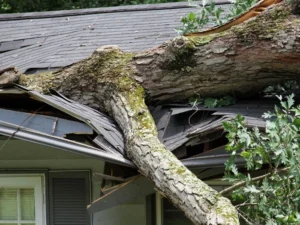
Trees add beauty, value, and shade to homes throughout Missouri. But while they’re an important part of your landscape, they can quietly wreak havoc on your home’s roofing system. The risk of trees on residential roofs grows significantly if your property has mature trees planted close to your home.
Branches that scrape shingles, roots that affect your home’s foundation, and leaves that clog gutters all contribute to long-term roof issues. Understanding the effects of nearby trees is crucial to ensuring your roof stays strong and intact for decades.
How Trees Cause Residential Roof Damage
Let’s break down the main causes of tree residential roofs, which can occur in both subtle and severe ways.
1. Falling Branches
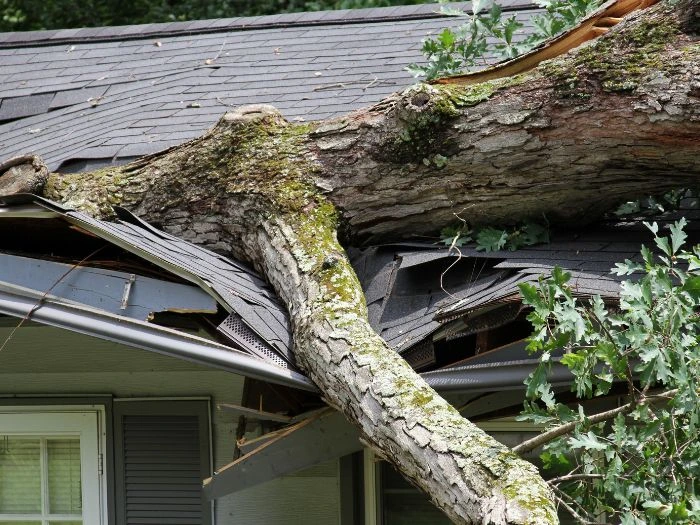
Large limbs, especially those from older or diseased trees, can snap off during storms or under the weight of snow. These falling branches can damage shingles, puncture roof decking, or even cause structural collapse in severe cases.
2. Overhanging Limbs
Branches hanging directly over your roof create friction against your shingles during windy days. Over time, this constant brushing wears away granules and weakens shingle integrity, making your roof more vulnerable to leaks and tree residential roof damage.
3. Leaf Accumulation
Leaves, needles, twigs, and blossoms constantly fall and settle on roofs. This debris traps moisture, leading to the growth of moss, mildew, and algae. When these conditions persist, the roofing materials decay faster.
4. Clogged Gutters
When gutters are blocked by falling debris, they can’t channel rainwater away from your roof and foundation. Water backs up, causing rotting roof decking, ice dams in winter, and eventually water intrusion inside your home.
5. Root Interference
Though not part of the visible roofing structure, tree roots can destabilize your home’s foundation. When a structure shifts, it can affect roof lines, create gaps around flashing, and cause uneven settling that leads to residential trees’ roofs.
The Role of Tree Species in Roof Damage
Not every tree poses the same level of risk. Here’s how some of the most common tree species in Missouri affect your roof:
Pine Trees: Shed long, acidic needles that clog gutters and promote moss growth. Their sap also sticks to shingles, encouraging algae and mold.
Oak Trees: Heavy acorns and thick branches can fall and crack roofing materials. They also shed large volumes of leaves in autumn.
Maple Trees: Produce seeds (helicopters) that easily fill up gutters and flat roofing systems.
Willows and Poplars: Known for aggressive root systems that can threaten home foundations and underground plumbing.
Bradford Pear Trees: Break easily during storms due to weak branching, increasing the likelihood of limb-related damage to residential roofs.
Warning Signs of Tree-Related Roof Issues
Early detection can help you avoid serious repairs. Watch for the following signs:
Shingles that are curling, cracked, or missing granules
Black or green streaks on shingles (indicating mold or algae)
Leaks inside your attic or near exterior walls
Gutters overflowing or sagging
Accumulated debris in roof valleys or behind chimneys
Sagging areas on the roof that indicate water pooling
If you spot any of these symptoms, tree residential roof damage may be the underlying cause.
Preventive Steps to Protect Your Roof from Trees
1. Maintain Proper Tree Trimming
Trim all tree limbs at least 6 to 10 feet away from your roof. This reduces friction and limits the number of branches that can fall on your house during storms. Consider hiring a certified arborist for safe and strategic pruning.
2. Schedule Regular Roof and Gutter Cleaning
Remove leaves and debris from both your roof and gutters at least twice a year—especially in spring and fall. Clean gutters allow water to flow freely and reduce the chances of ice dams or standing water.
3. Install Protective Gutter Guards
Gutter guards block larger debris from entering your drainage system. They’re especially helpful for homes with multiple trees nearby, reducing clogs and the risk of trees on residential roofs.
4. Use Zinc or Copper Strips
These can be installed along the roof ridge to prevent moss and algae growth, particularly in shaded areas where trees keep the roof damp for longer periods.
5. Conduct Annual Roof Inspections
Have a roofing professional check your roof annually or after major storms. They can catch subtle signs of tree residential roof damage before they lead to bigger problems.
The Connection Between Seasons and Tree-Related Roof Damage
Missouri’s four seasons each bring unique risks when it comes to trees and residential roof damage. Here’s what you should be aware of:
Spring
Branches are weighed down by rain and may break off
Tree pollen and blossoms gather in roof valleys and gutters
Increased rain may exploit any existing roof weaknesses
Summer
Trees grow rapidly, often extending branches over your roof
Drought conditions may cause some trees to drop limbs unexpectedly
Fall
Leaf drop is at its peak, filling gutters and roof surfaces
Wet leaves stick to shingles and promote mold and rot
Shorter days and cooler temps slow evaporation, extending moisture exposure
Winter
Snow and ice build up on limbs, increasing the likelihood of breakage
Clogged gutters lead to ice dam formation and potential water damage under shingles
Understanding how each season contributes to trees’ residential roof damage allows you to tailor your maintenance efforts year-round.
How Tree Damage Affects Your Roof’s Lifespan
If unmanaged, tree-related damage can shorten your roof’s life by several years. Shingles that are constantly brushed, punctured, or soaked are more likely to fail prematurely. Moss growth can lift shingles and hold moisture against the underlayment, weakening its structure over time.
Over time, this small, preventable tree residential roof damage can escalate into major problems like:
Roof rot
Water leaks
Mold inside your attic
Damaged insulation
Increased energy bills due to compromised ventilation
Insurance and Tree-Related Roof Claims
Many homeowners wonder if tree-related residential roof damage is covered by insurance. Here’s what you need to know:
Storm-Related Tree Falls: If a healthy tree falls due to a storm or strong wind, most homeowner policies will cover the roof damage it causes.
Negligence: If a tree was obviously dying, unmaintained, or previously flagged as dangerous, insurance may deny your claim due to homeowner negligence.
Indirect Damage: Issues like clogged gutters or long-term mold from shade are rarely covered. These are seen as maintenance issues, not accidents.
To avoid claim issues, always document your tree care efforts and roof inspections.
Landscaping Strategies to Minimize Roof Risk
Tree placement and selection can reduce your risk of trees causing residential roof damage from the start. Here are some landscaping tips for homeowners:
Plant the Right Distance from Your Home
Large shade trees should be planted at least 20 feet away from your roofline. Smaller ornamental trees may be planted closer, but still require regular maintenance.
Choose Tree Species Wisely
Select trees with less aggressive roots, low debris output, and sturdy branching structures. Examples include:
Eastern Redbud
Dogwood
Serviceberry
Japanese Maple
Avoid trees known for brittle limbs, rapid shedding, or invasive roots.
Mulch and Moisturize Properly
Trees under drought stress are more likely to drop branches. Proper watering, mulching, and fertilizing improve tree health and reduce the chance of breakage or limb failure.
FAQ’s
What causes tree damage to roofs?
Falling branches, overhanging limbs, leaf buildup, clogged gutters, and root interference can all damage roofs.
How do falling branches affect roofs?
Falling branches can puncture shingles, break roof decking, or cause structural damage.
Why is leaf buildup a problem?
Leaves trap moisture, promoting mold and algae growth, which accelerates roof decay.
How do clogged gutters impact my roof?
Blocked gutters prevent water drainage, causing rotting and ice dams.
Can tree roots damage my roof?
Tree roots can destabilize your foundation, affecting roof lines and causing gaps.
Which trees pose the most risk?
Pine, oak, maple, willow, poplar, and Bradford pear trees are high-risk for roof damage.
How can I prevent tree damage to my roof?
Regular tree trimming, cleaning gutters, and annual roof inspections help prevent damage.
Is tree damage covered by insurance?
Storm-related tree falls are usually covered, but negligence may not be.
How does tree damage affect roof lifespan?
Tree damage can shorten your roof’s lifespan by causing leaks, mold, and premature wear.
How often should I inspect my roof?
Inspect your roof annually or after major storms to catch tree-related damage early.
How FM Roofing Helps Homeowners Manage Tree Risks
When it comes to protecting your home from tree-related residential roof damage, FM Roofing is your trusted local partner. We offer:
Comprehensive roof inspections tailored to tree-related risks
Fast and efficient gutter cleaning and repair services
Custom maintenance plans for tree-heavy properties
Roof replacement options designed for shaded or debris-prone roofs
Consultations on tree trimming and safe planting distances
Our team understands the unique roofing challenges Missouri homeowners face. We help you protect your home not just from the elements, but from the environment growing around it.
Final Thoughts: Protecting Your Roof from Tree Damage
Trees and residential roofs can live in harmony, but only when homeowners stay vigilant. From falling limbs to seasonal leaf buildup, the risks are real—but they’re also manageable.
Understanding the causes and effects of tree residential roof damage, maintaining your property wisely, and partnering with experts like FM Roofing will help ensure your home stays secure, beautiful, and energy efficient.
If you suspect tree-related damage or want to get ahead of potential issues, contact FM Roofing today for a full evaluation. We’ll help you keep your roof strong and your trees safe—because both deserve the care and attention they need.