Missouri homeowners know how unpredictable the weather can be. From heavy winds and hail to ice storms and torrential rains, severe weather events put every roof to the test. While no roof is completely immune, storm damage roof prevention can make all the difference between costly repairs and a roof that stays strong for years to come.
At FM Roofing, we’ve seen firsthand how proactive steps can protect a home. A well-maintained, storm-ready roof not only saves money but also provides peace of mind when the weather turns harsh. Stay updated—join us on Facebook.
Find Storm Damage
Before discussing storm damage roof prevention, it’s important to know what types of weather cause the most issues:
- High winds can lift shingles and expose the underlayment.
- Hail can crack shingles, damage flashing, and dent metal roofing.
- Heavy rain can exploit weak spots and cause leaks.
- Ice and snow create weight and lead to ice dams.
Knowing how storms impact roofs helps homeowners take steps to minimize risks.
The Importance of Storm Damage Roof Prevention
Preventive measures are often less expensive than major repairs. By focusing on storm damage roof prevention, you protect your home’s structure, preserve curb appeal, and avoid costly emergency calls.
FM Roofing emphasizes a proactive approach: the best time to prepare your roof is before the storm season begins.
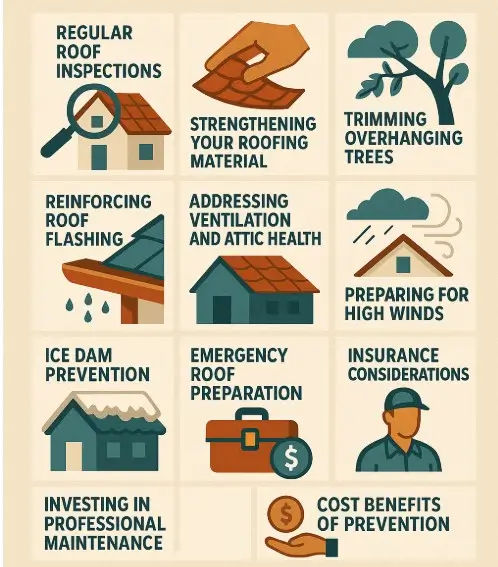
• Regular Roof Inspections
A critical part of storm damage roof prevention is scheduling regular inspections. At least twice a year—once in the spring and once in the fall—homeowners should have their roofs evaluated.
Inspections help identify:
- Missing, loose, or damaged shingles
- Weak flashing around chimneys, skylights, and vents
- Signs of water intrusion in the attic
- Areas of sagging or structural weakness
Catching these issues early allows repairs to be made before storms exploit them.
• Strengthening Your Roofing Material
Different roofing materials handle storms in different ways. Asphalt shingles are common but can be vulnerable to high winds. Metal roofing is durable, while tile roofing can resist hail but may crack if improperly installed.
For effective storm damage roof prevention, homeowners should choose materials that balance durability with their budget and local climate. FM Roofing helps clients select the right option for long-term resilience.
• Gutter Maintenance
Gutters are often overlooked, but they play a major role in storm damage roof prevention. When gutters are clogged, water can back up and seep under shingles, causing leaks.
Simple steps like cleaning gutters twice a year, installing gutter guards, and checking for secure fasteners ensure water flows properly away from the roof and foundation.
• Trimming Overhanging Trees
Overhanging branches are a hidden threat. During storms, branches can break off and puncture roofing materials. Falling limbs also clog gutters and increase moisture risks.
Tree maintenance is a simple but highly effective step in storm damage roof prevention. By trimming branches away from the roofline, homeowners minimize hazards.
• Reinforcing Roof Flashing
Flashing seals the vulnerable points of your roof—around chimneys, vents, and skylights. When flashing is loose or damaged, storms can drive water straight into your home.
FM Roofing recommends reinforcing or replacing flashing as part of storm damage roof prevention, especially before the storm season begins.
• Addressing Ventilation and Attic Health
Proper ventilation keeps your roof dry and balanced. Without it, moisture builds up and weakens roofing materials, making them more susceptible to storm damage.
Homeowners who prioritize attic ventilation as part of storm damage roof prevention reduce the risks of leaks, mold growth, and premature roof aging.
• Preparing for High Winds
High winds can rip off shingles if they’re already loose. One key step in storm damage roof prevention is making sure shingles are nailed properly and sealed tightly.
In some cases, FM Roofing suggests installing wind-resistant shingles for areas frequently hit by storms.
• Ice Dam Prevention
For homes in areas with cold winters, ice dams are a major concern. They occur when melting snow refreezes at the roof’s edge, forcing water beneath shingles.
Effective storm damage roof prevention includes adding proper insulation, installing ice shields, and ensuring gutters are clear to allow smooth water runoff.
• Emergency Roof Preparation
Before a major storm, homeowners can take extra steps to reduce risks:
- Secure loose items in the yard that could strike the roof
- Double-check that gutters are clear
- Have a tarp ready in case temporary protection is needed
Even small preparations contribute to storm damage roof prevention during emergencies.
• Investing in Professional Maintenance
DIY fixes only go so far. True storm damage roof prevention requires the expertise of professional roofers. FM Roofing provides maintenance plans that cover inspections, repairs, and reinforcement before storm season arrives.
This proactive investment ensures your roof is always storm-ready.
• Insurance Considerations
While prevention reduces risks, it’s still wise to understand your homeowner’s insurance policy. Some policies may cover storm damage repairs, but coverage is often denied if neglect is found.
By proving you’ve taken storm damage roof prevention steps, you strengthen your claim should damage occur.
• Cost Benefits of Prevention
Replacing a roof after major storm damage can cost tens of thousands of dollars. Preventive care is far less expensive. By focusing on storm damage roof prevention, homeowners extend their roof’s lifespan, avoid large expenses, and protect their family’s safety.
FM Roofing’s Approach to Storm Protection
FM Roofing specializes in helping Missouri homeowners prepare their roofs for severe weather. Our services include:
- Comprehensive inspections
- Reinforcement of weak areas
- Gutter cleaning and maintenance
- Emergency storm response
Every service is guided by the principle of storm damage roof prevention, ensuring that our clients feel confident in their home’s ability to withstand harsh weather.
Seasonal Roof Maintenance
Spring and fall are ideal times for roof care. Seasonal maintenance is part of effective storm damage roof prevention because it ensures your roof is ready for both summer storms and winter snow.
FM Roofing schedules seasonal maintenance visits to keep homes prepared year-round.
Signs You Need Storm Preparation Now
Homeowners should not wait until damage appears. Warning signs that storm prep is needed include:
- Curling or missing shingles
- Leaks in the attic or ceiling stains
- Rusted or damaged flashing
- Sagging rooflines
If you see any of these signs, storm damage roof prevention steps should be taken immediately.
Long-Term Value of a Storm-Ready Roof
A strong roof does more than keep you dry. It protects your home’s value, lowers insurance risks, and gives you confidence during storm season.
By making storm damage roof prevention part of your home maintenance routine, you invest in long-term durability and security.
Final Thoughts
Storms may be inevitable, but costly roof damage doesn’t have to be. With proactive planning, regular maintenance, and expert help, Missouri homeowners can greatly reduce risks.
FM Roofing is here to support you with inspections, reinforcement, and professional care tailored to your home. When you prioritize storm damage roof prevention, you protect not only your roof but your entire home and family.
Frequently Asked Questions For This Topic:
1. Why is storm damage roof prevention important for Missouri homeowners?
Storm damage roof prevention is important because Missouri weather is unpredictable, with high winds, hail, ice, and heavy rain. Preventive care helps reduce sudden leaks, structural damage, and expensive repairs. A well-maintained roof performs better during storms and protects your home long-term.
2. How often should I inspect my roof to prevent storm damage?
Homeowners should inspect their roof at least twice a year—once in spring and once in fall—and after major storms. Regular inspections help identify loose shingles, flashing issues, and moisture problems early, allowing repairs before severe weather causes serious damage.
3. Can regular maintenance really save money on roof repairs?
Yes, regular maintenance costs far less than emergency storm repairs or full roof replacement. Preventive steps like inspections, gutter cleaning, and reinforcing weak areas extend roof lifespan, reduce insurance issues, and help homeowners avoid thousands of dollars in unexpected storm-related expenses.
4. Should I rely on DIY fixes or hire professionals for storm preparation?
While small tasks like clearing gutters can be done yourself, professional roofing maintenance is essential for true storm damage prevention. Experienced roofers can spot hidden issues, reinforce vulnerable areas, and ensure materials are installed correctly to withstand strong winds and severe weather.