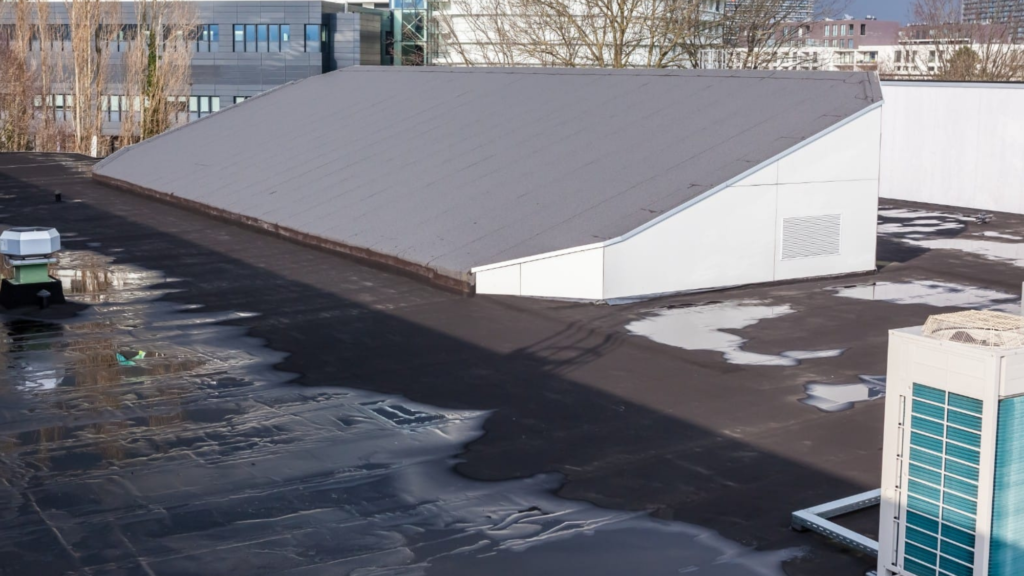
Water is one of the most persistent threats to any roofing system. While homeowners often focus on shingles, flashing, gutters, and visible leaks, drainage is equally important to the long-term performance of a roof. For commercial buildings with large, low-slope, or flat roofing systems, proper commercial roof drainage is especially important because these roofs can collect substantial amounts of rainwater during storms.
Although the primary audience for commercial roofing discussions is often business owners and property managers, homeowners can benefit from understanding how commercial drainage systems work. Many residential properties have low-slope additions, garages, workshops, detached buildings, or other structures where effective drainage is essential. Learning the principles behind commercial roof drainage can help homeowners recognize potential water-management problems and make better decisions about their own roofing systems.
A commercial roof does not simply need to keep water out. It also needs to move water away from the roof surface efficiently. When water cannot drain properly, it may remain on the roof for extended periods, increasing the risk of membrane deterioration, leaks, structural damage, mold, insulation problems, and expensive repairs.
This guide explains how commercial roof drainage systems work, why drainage matters, common drainage components, warning signs of drainage problems, maintenance strategies, and how professional roofing services can help prevent water damage.
What Is Commercial Roof Drainage?
Commercial roof drainage refers to the systems and design features used to collect rainwater from a commercial roof and direct it safely away from the building.
Commercial roofs are often much larger than residential roofs. Because of their size and relatively low slopes, they may require specialized drainage systems to move water efficiently.
A drainage system may include:
- Internal roof drains
- Scuppers
- Gutters
- Downspouts
- Drainage channels
- Slope-to-drain systems
- Overflow drains
- Tapered insulation
The appropriate combination depends on the building’s size, roof design, climate, and local requirements.
Why Commercial Roof Drainage Matters
Without effective drainage, rainwater can accumulate on a roof.
Standing water can place additional stress on:
- Roofing membranes
- Insulation
- Roof decking
- Structural framing
- Flashing
- Seams
- Drainage components
Over time, persistent moisture can contribute to deterioration and leaks.
Effective commercial roof drainage helps move water away from vulnerable roofing components and reduces the amount of time moisture remains on the roof.
How Flat and Low-Slope Roofs Handle Water
Many commercial buildings use low-slope roofing systems rather than steeply pitched roofs.
A steep residential roof allows gravity to move water quickly toward gutters and downspouts. A low-slope roof does not have the same natural water-shedding capability.
Instead, the roof is designed with drainage pathways.
These pathways direct water toward designated collection points such as drains, scuppers, or gutters.
The Importance of Roof Slope
A roof does not necessarily need to look steep to have effective drainage.
Even a relatively low-slope commercial roof can be designed to move water toward drains.
Proper slope helps prevent unnecessary ponding and directs rainfall toward the intended drainage points.
If a roof develops low areas because of settlement, structural movement, or insulation problems, water may accumulate instead of reaching the drains.
Internal Roof Drains
Internal drains are common components of commercial roof drainage systems.
These drains are installed within the roof surface and connected to piping that carries water away from the building.
The roof is designed to slope toward these drains.
Internal drains can be especially useful on large commercial buildings where traditional exterior gutters may not be practical.
How Internal Drains Work
Rainwater flows across the roof toward a low point.
The drain collects the water and directs it into a drainage pipe.
The piping then carries water away from the building.
Drain components may include:
- Drain bowls
- Strainers
- Clamping rings
- Flashing
- Drain connections
Proper installation around these components is essential because the drain area represents a penetration through the roofing system.
Scuppers
Scuppers are openings installed along the edge of a low-slope roof that allow water to drain through the parapet or exterior wall.
Scuppers can direct water into:
- Downspouts
- Splash blocks
- Drainage channels
- Open areas away from the building
Scuppers are another important part of commercial roof drainage.
Gutters and Downspouts
Some commercial roofing systems use traditional gutters and downspouts.
Gutters collect water along the roof perimeter, while downspouts carry the water toward the ground.
This system is familiar to homeowners because it is commonly used on residential roofs.
However, commercial applications may require larger-capacity components because of the size of the roof.
Oversized Drainage Components
A commercial building can collect enormous amounts of water during heavy rainfall.
Drainage systems must therefore be appropriately sized for the roof area and anticipated rainfall.
If drainage components are too small, water may back up or overflow during major storms.
Professional roof design considers these factors when developing a drainage system.
Overflow Drainage
Some commercial roofs incorporate secondary drainage systems.
Overflow drains, scuppers, or other emergency drainage features provide an additional pathway when primary drains become overwhelmed or blocked.
Secondary drainage is particularly important because a blocked primary drain should not allow water to accumulate indefinitely on the roof.
Tapered Insulation
Tapered insulation is another tool used to improve commercial roof drainage.
Instead of having a completely uniform insulation thickness, tapered insulation is designed with gradual changes in height that create drainage slopes.
This helps direct water toward drains and other collection points.
Tapered insulation can be particularly useful when the existing roof structure does not provide sufficient slope.
Ponding Water
Ponding water refers to water that remains on a roof after rainfall rather than draining away within a reasonable period.
Some temporary water accumulation may occur after a major storm, but persistent ponding should be investigated.
Ponding can indicate:
- Inadequate slope
- Blocked drains
- Damaged insulation
- Structural settlement
- Drainage design problems
- Roofing deterioration
Why Ponding Is a Concern
Persistent ponding increases the amount of time the roofing system remains exposed to moisture.
Over time, this may contribute to:
- Membrane deterioration
- Leaks
- Mold growth
- Insulation damage
- Structural concerns
A professional inspection can help determine why water is accumulating.
Common Causes of Drainage Problems
Several issues can interfere with commercial roof drainage.
Common causes include:
- Leaves and debris
- Dirt buildup
- Blocked drain strainers
- Damaged gutters
- Improper roof slope
- Structural settlement
- Damaged insulation
- Ice accumulation
- Poorly designed drainage
- Roofing repairs that obstruct water flow
Identifying the cause is important because simply removing standing water may not solve the underlying problem.
Debris Buildup
Leaves, branches, dirt, and other debris can block drainage components.
This is particularly common near:
- Roof drains
- Scuppers
- Gutters
- Downspouts
Regular inspections and cleaning help keep drainage pathways open.
Seasonal Drainage Maintenance
Different seasons create different drainage challenges.
Spring
Spring storms can bring heavy rain and debris from winter.
Inspect drains, gutters, and scuppers before severe spring weather arrives.
Summer
Thunderstorms can produce large amounts of rainfall in a short period.
Drainage systems need to be clear and functioning before major storms occur.
Fall
Falling leaves can accumulate around drains and gutters.
Fall maintenance is particularly important for properties surrounded by mature trees.
Winter
Ice and snow can interfere with drainage.
Freeze-thaw cycles can also expose roofing materials and drainage components to additional stress.
Commercial Roof Drainage and Heavy Rain
Heavy rainfall can quickly overwhelm poorly maintained drainage systems.
During intense storms, large volumes of water may reach the roof within minutes.
A properly designed commercial roof drainage system helps move that water away before it can accumulate.
Missouri Weather and Roof Drainage
Missouri experiences a wide range of weather conditions, making water management an important part of roofing maintenance.
Properties may encounter:
- Thunderstorms
- Heavy rain
- Hail
- Snow
- Ice
- High winds
- Rapid temperature changes
These conditions can affect both roofing materials and drainage components.
Hail Damage and Drainage
Hail can damage roofing membranes, flashing, gutters, and drain components.
After a major hailstorm, property owners should consider having the roof and drainage system professionally inspected.
Damage that appears minor from the ground may affect water flow or waterproofing.
Winter Ice and Drainage
Freezing temperatures can cause water to freeze inside or around drainage components.
Ice expansion may place pressure on roofing and drainage materials.
Maintaining drainage before winter helps reduce some potential problems.
The Relationship Between Roofing and Drainage
A roof and its drainage system should be considered a single water-management system.
A high-quality roofing membrane cannot perform effectively if water is continually accumulating because of poor drainage.
Similarly, an excellent drainage system cannot compensate for damaged roofing materials.
Both systems need to work together.
Roof Membrane Protection
Commercial roofs may use materials such as:
- EPDM
- TPO
- PVC
- Modified bitumen
- Built-up roofing
Each membrane system has specific installation and maintenance requirements.
Regardless of the material, proper drainage helps reduce prolonged moisture exposure.
Drainage and Roof Lifespan
Good commercial roof drainage can contribute to longer roofing-system performance.
When water drains properly, the roof is less likely to experience prolonged moisture exposure.
Regular maintenance can also help identify problems before they develop into extensive damage.
Signs of Drainage Problems
Property owners should watch for warning signs such as:
- Standing water
- Slow-draining areas
- Overflowing gutters
- Water stains
- Damaged flashing
- Sagging roof sections
- Interior ceiling stains
- Musty odors
- Wet insulation
These signs should not be ignored.
Interior Water Damage
Roof drainage problems can eventually result in interior damage.
Water may enter through:
- Roofing seams
- Flashing
- Penetrations
- Membrane damage
- Drain connections
Once water reaches the interior, it may damage ceilings, walls, insulation, electrical components, equipment, and stored materials.
Protecting Insulation
Wet insulation may lose some of its intended performance and can become difficult to dry.
Moisture trapped within a roofing assembly can also contribute to deterioration.
Addressing drainage issues early helps reduce the risk of extensive insulation damage.
Structural Concerns
Persistent water accumulation can add substantial weight to a roof.
In severe cases, structural components may become stressed.
Warning signs such as sagging should always be evaluated promptly by qualified professionals.
Drain Inspections
Routine inspection of drainage components is an important part of roof maintenance.
Inspectors may check:
- Drain strainers
- Drain bowls
- Gutters
- Downspouts
- Scuppers
- Flashing
- Overflow systems
They can also evaluate whether water is moving properly across the roof.
Professional Roof Inspections
A professional inspection can identify drainage problems that are difficult to see from the ground.
Inspectors may examine:
- Roofing membranes
- Drainage pathways
- Roof slope
- Flashing
- Penetrations
- Seams
- Structural conditions
This comprehensive approach helps identify the source of water-management problems.
Preventive Maintenance
Preventive maintenance is usually less expensive than emergency repairs.
A maintenance program may include:
- Regular inspections
- Drain cleaning
- Gutter cleaning
- Debris removal
- Flashing inspections
- Membrane repairs
- Drainage evaluations
The exact schedule depends on the building and environment.
Keeping Drainage Components Clear
One of the simplest ways to protect commercial roof drainage is keeping collection points free from debris.
Property owners should never assume that drains are clear simply because the roof appears clean.
Debris can accumulate around strainers and hidden drainage components.
Professional Cleaning
Commercial roofs can be large and difficult to access safely.
Professional roof maintenance teams have the equipment and experience needed to inspect and clean drainage components while minimizing safety risks.
Repairing Damaged Drainage Components
Drainage systems can deteriorate over time.
Potential repairs include:
- Replacing damaged drain strainers
- Repairing gutters
- Replacing downspouts
- Repairing scuppers
- Correcting flashing
- Improving drainage slopes
Addressing these issues early can help protect the roofing system.
When Drainage Improvements Are Needed
Sometimes maintenance is not enough.
Drainage improvements may be necessary when:
- Ponding repeatedly occurs
- The roof slope is inadequate
- Drain locations are poorly designed
- Building settlement has altered drainage
- The roof has been modified
- The existing system cannot handle rainfall effectively
A professional roofing assessment can help determine the most appropriate solution.
Roof Replacement and Drainage Design
A roof replacement provides an excellent opportunity to evaluate commercial roof drainage.
Before installing a new roof, contractors can assess:
- Existing drainage locations
- Roof slope
- Drain capacity
- Overflow provisions
- Insulation design
- Roof penetrations
Improving drainage during replacement can help protect the new roofing system.
Tapered Insulation During Replacement
If drainage problems are related to inadequate slope, tapered insulation may be incorporated into a new roofing assembly.
The insulation can create pathways that direct water toward drains.
This approach can improve drainage without requiring major structural changes in some situations.
Importance of Proper Flashing
Flashing is critical around drains, scuppers, parapets, walls, and penetrations.
Poorly installed flashing can allow water to bypass the drainage system and enter the building.
Professional installation is essential.
Drainage and Roof Maintenance Plans
Property owners can benefit from a structured roof maintenance plan.
A maintenance plan may establish:
- Inspection intervals
- Drain cleaning schedules
- Storm inspection procedures
- Repair priorities
- Documentation requirements
Regular maintenance helps property owners stay ahead of potential problems.
Documenting Roof Conditions
Keeping records of inspections and repairs provides valuable information over time.
Documentation may include:
- Inspection reports
- Photographs
- Drainage observations
- Repair invoices
- Maintenance records
This information can help identify recurring problems and support future repair decisions.
Why Ignoring Drainage Problems Can Be Expensive
A small drainage problem can become a major roofing issue if ignored.
For example, a blocked drain may cause repeated ponding. Continued moisture exposure can damage the membrane, insulation, and decking.
Eventually, the problem may require extensive repairs rather than simple maintenance.
Benefits of Proper Commercial Roof Drainage
A properly designed and maintained drainage system can provide several benefits.
These include:
- Reduced ponding
- Lower leak risk
- Better roof performance
- Protection of structural components
- Reduced maintenance problems
- Longer roofing-system life
Effective drainage is an important part of responsible property maintenance.
Why Homeowners Should Understand Commercial Drainage
Although this article focuses on commercial systems, the principles apply to residential properties as well.
Homeowners may have:
- Flat-roof additions
- Garages
- Workshops
- Detached structures
- Low-slope porches
These areas can experience drainage problems similar to those found on commercial buildings.
Understanding commercial roof drainage can help homeowners recognize the importance of proper water management on any roof.
Choosing a Roofing Professional
Drainage problems require more than simply removing visible water.
A qualified roofing professional should evaluate the entire system.
Look for a contractor who understands:
- Roofing membranes
- Drainage design
- Flashing
- Roof slope
- Waterproofing
- Insulation
- Local weather conditions
Experience matters when diagnosing complex water-management problems.
Why Choose FM Roofing?
At FM Roofing, we believe successful roofing begins with understanding how every component works together. Roofing materials, flashing, insulation, drainage, ventilation, and structural components all contribute to the performance of a building.
Our experienced team can evaluate roofing and drainage concerns, identify potential problem areas, and recommend practical solutions based on the condition of the property.
Whether you need maintenance, repairs, a drainage assessment, or a complete roof replacement, FM Roofing is committed to providing professional workmanship and dependable service.
We understand that protecting a roof means managing water effectively. That’s why we take commercial roof drainage seriously when evaluating roofing performance.
Final Thoughts
Proper commercial roof drainage is one of the most important components of protecting a commercial roofing system from water damage. Without an effective drainage strategy, even a high-quality roof can experience problems caused by ponding water, clogged drains, damaged flashing, and excessive moisture exposure.
Regular inspections, preventative maintenance, properly sized drainage components, and professional repairs can help keep water moving away from the building. When a roof needs replacement, evaluating drainage at the same time provides an opportunity to correct existing problems and improve the performance of the new roofing system.
For homeowners, understanding drainage is equally valuable. Low-slope additions and other residential structures can experience many of the same water-management challenges as commercial buildings.